
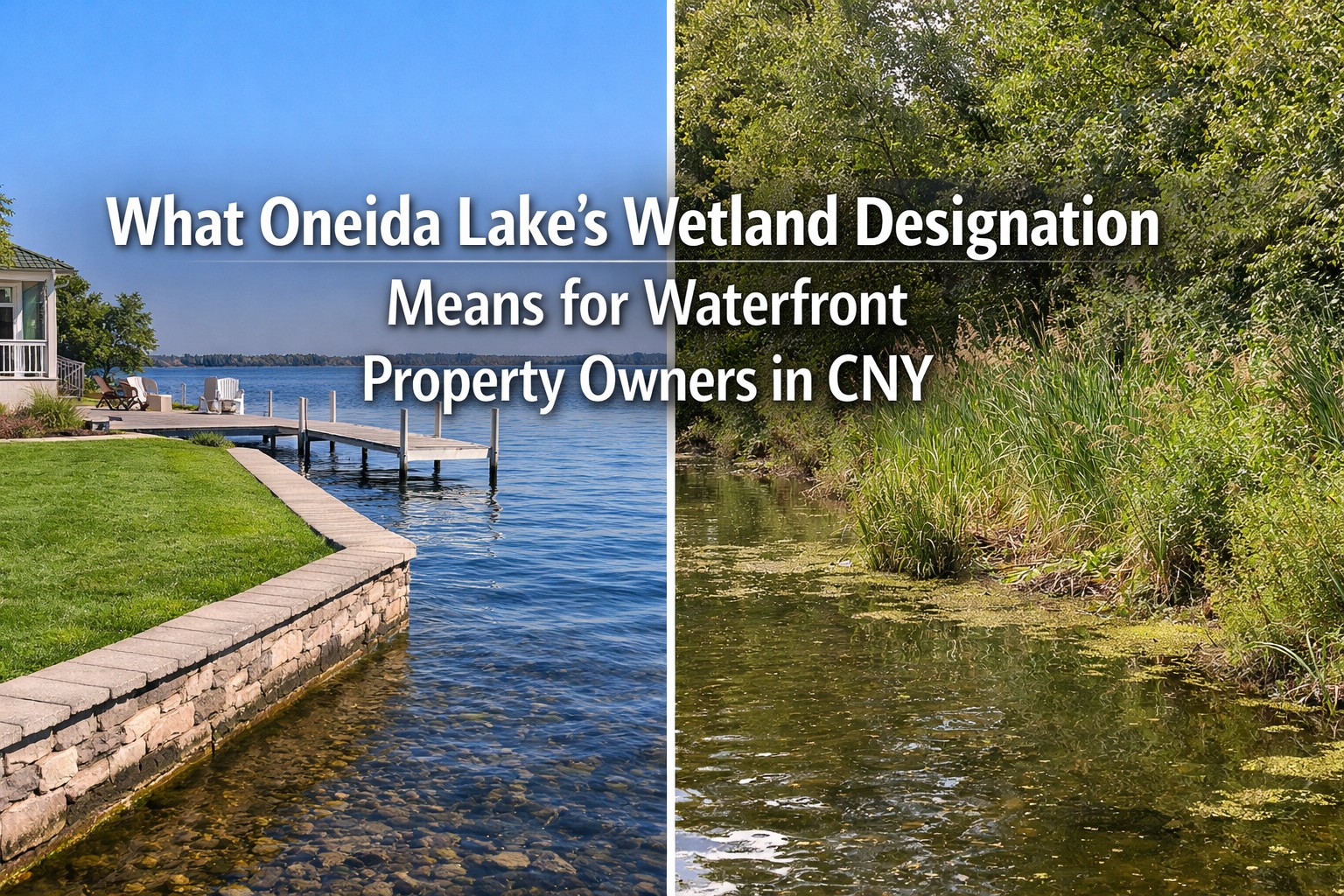
What Oneida Lake’s Wetland Designation Could Mean for Waterfront Property Owners in Central NY
If you own waterfront property on Oneida Lake, you may have started hearing more about recent changes to New York State’s wetland regulations.
And with that, a lot of questions.
Because when terms like “wetland designation” come up, it’s not always clear what that actually means for your property—or what, if anything, you need to do differently.
If you’ve heard the term “wetland designation” and immediately pictured your property turning into some version of Shrek’s swamp—don’t worry, that’s not what this means.
You don’t suddenly own a marsh, and nothing about your home has changed overnight.
But it does mean there may be more structure—and oversight—around what can be done along the shoreline moving forward.
What’s Behind the Conversation?
New York State has expanded how wetlands are defined and regulated, which means areas that may not have previously fallen under oversight could now be included.
For properties around Oneida Lake, that has brought increased attention to shoreline areas and how they’re classified.
It’s important to understand:
👉 Not every property is affected in the same way
👉 And not every change happens immediately
But awareness matters.
What This Could Mean for Waterfront Owners
Depending on your property and how it’s classified, this could impact things like:
- Obtaining permits for shoreline work
- Adding, replacing, or modifying docks
- Installing or updating retaining walls
- Making changes within the buffer area near the water
For example, if your home sits close to the shoreline and you’re considering adding a deck, porch, or expansion within that buffer zone, it may require additional review and approval.
This doesn’t mean you can’t make changes—it just means there may be more steps involved.
Why This Matters When Selling
This is where things become especially relevant.
Today’s buyers are more informed—and more cautious—when it comes to waterfront property.
Questions around:
👉 dock placement
👉 shoreline modifications
👉 future improvements
…are coming up more often.
For sellers, this means:
- Having a basic understanding builds confidence
- Being prepared for questions avoids delays
- Clear positioning of the property matters more than ever
What You Should Do Now
If you own on Oneida Lake, this isn’t a reason to worry—but it is a reason to stay informed.
A few simple steps:
- Review any past shoreline work or permits
- Understand where your property boundaries meet the water
- Ask questions before planning new improvements
Even a general understanding puts you in a stronger position.
If you own property along Oneida Lake, understanding how these changes may—or may not—apply to your home is the best place to start.
Waterfront property has always come with unique considerations—and evolving regulations are part of that.
The key isn’t to overreact.
It’s to stay informed, understand your specific property, and make decisions with clarity.
Because with waterfront, no two properties are exactly the same.
— Gwenn McDonald
Broker/Owner, Around Syracuse Realty