
Pricing Your Home Correctly:
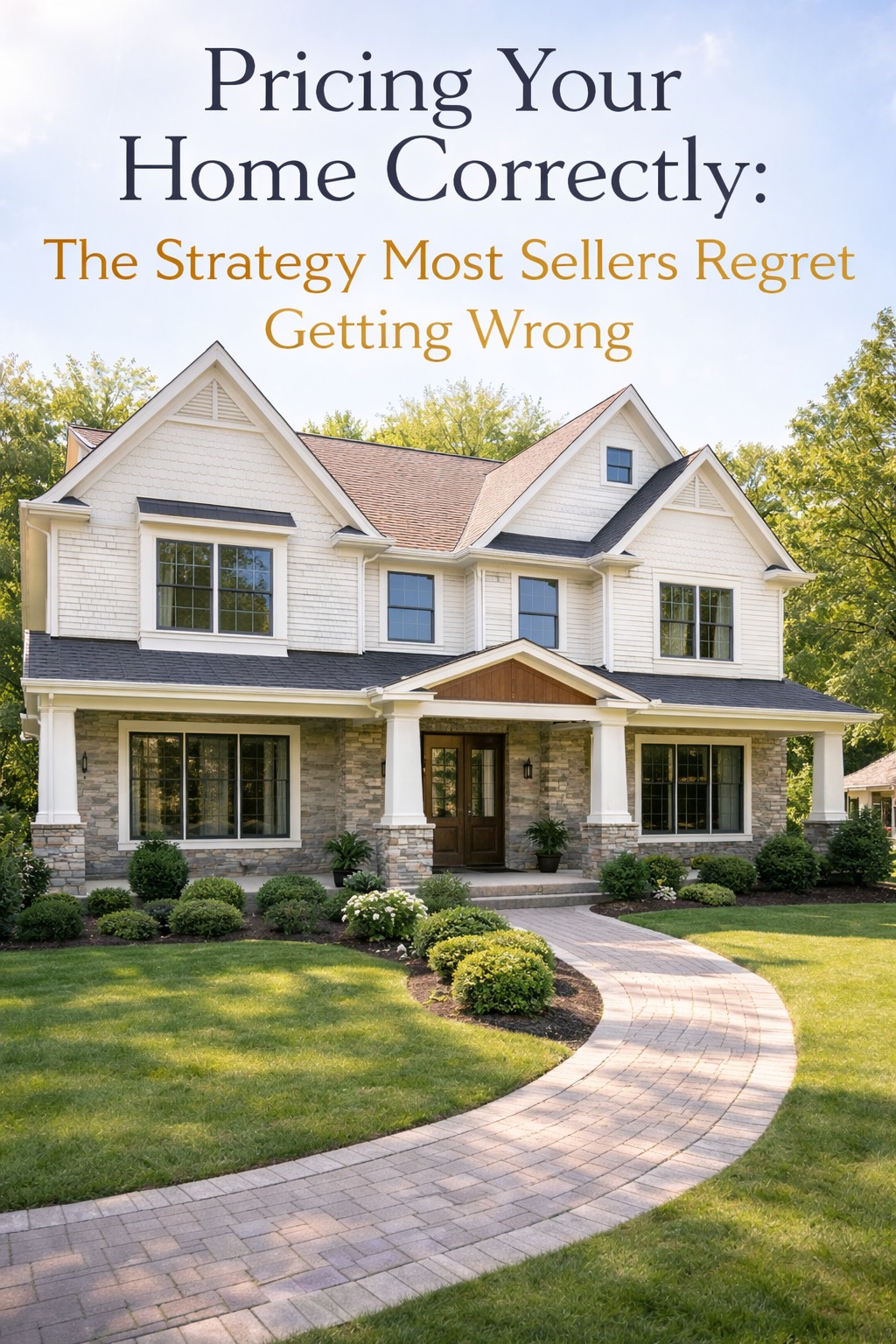
Pricing your home correctly is one of the most important—and most misunderstood—parts of the selling process.
If you ask homeowners what they regret most, it’s rarely the timing.
It’s how their home was priced.
Not because it didn’t sell—
but because of how it sold.
Too much stress.
Too much time on the market.
Too many adjustments along the way.
And in some cases… uncertainty about whether they truly maximized their outcome.
The Most Common Pricing Mistake
It’s not underpricing.
It’s not even the market shifting.
It’s this:
Pricing your home based on hope instead of positioning is where most strategies begin to break down.
Many sellers look at:
- what they want to walk away with
- what a neighbor’s home sold for
- or what they feel their home is worth
And from there, a number gets chosen.
But buyers don’t evaluate your home that way.
They evaluate it in comparison.
How Buyers Actually See Your Home
Today’s buyers are highly informed.
Before they even step inside, they’ve already:
- compared your home to several others
- evaluated condition, updates, and location
- formed a clear sense of value
Your home isn’t judged in isolation.
It’s judged in context.
And when pricing your home correctly is missed—even slightly—buyers don’t negotiate.
They move on.
The “We Can Always Come Down” Strategy
This is one of the most common approaches—and one of the most costly.
It sounds reasonable:
“We can always lower the price later.”
But what actually happens is:
- Your strongest window of attention passes
- Buyer momentum fades
- Showings slow
- Price reductions become necessary
Instead of building demand, you’re trying to rebuild it.
And in most cases, the market has already formed an opinion.
The Other Side of the Conversation
There’s another version of regret that doesn’t get talked about as often.
It happens when a home sells quickly.
At first, it feels like a win.
But then the questions start:
- “Did we price it too low?”
- “Should we have pushed higher?”
- “Did we leave money on the table?”
Especially in a market like we’re seeing in Central New York, where multiple offers are common.
If your home sells quickly without strong competition, it can create doubt.
Not because the result was bad—but because it’s unclear whether the outcome was fully maximized.
A fast sale doesn’t always mean it was the right strategy.
The goal isn’t just speed.
It’s creating the right level of demand so you can feel confident in the result.
Why the First 7–10 Days Matter
The moment your home hits the market is when it receives:
- the most attention
- the most showings
- the highest level of buyer interest
This is when pricing your home correctly matters most.
Because once that initial window passes,
it’s very difficult to recreate that same level of energy.
That early momentum either works for you—or against you.
The “Make Me Move” Misconception
Some sellers believe there’s a buyer out there who will fall in love and stretch beyond what the market supports—a “make me move” buyer.
But buyers don’t think that way.
They compare.
They evaluate.
They stay grounded in what else is available.
No one is looking to overpay just to convince someone to move.
Even in a competitive market.
What buyers will do is compete—
when a home feels well-positioned and worth pursuing.
That’s the difference.
You don’t get stronger results by waiting for one buyer to overextend.
You get them by creating the kind of demand where multiple buyers feel compelled to act.
What Pricing Your Home Correctly Actually Means
Pricing isn’t about choosing a number.
It’s about choosing a position in the market.
Every home falls into one of three general strategies:
- positioned to create urgency and competition
- aligned with the market for balanced demand
- or pushed higher when the property supports it
The key is knowing which approach aligns with:
- your home
- current market conditions
- and your goals
And making that decision before you go live—not after.
Where Sellers Start to Feel Regret
Looking back, most sellers don’t say:
“We should have priced higher.”
They say:
- “We lost time.”
- “We had to adjust more than we expected.”
- “It felt more stressful than it needed to be.”
Because pricing your home correctly doesn’t just impact price.
It impacts:
- your timeline
- your leverage
- your experience throughout the process
The Bottom Line
In today’s Central New York market, most homes will sell.
But not every seller will feel confident about how it happened.
Pricing your home correctly isn’t about testing the market.
It’s about entering the market with intention.
If You’re Thinking About Selling
Before choosing a price, it’s worth understanding how your home will be positioned—and how buyers are likely to respond.
That’s where a thoughtful strategy begins.