
🏡 What Older Homes Offer That New Construction Simply Can’t Replicate
(And why they’re not the right fit for every buyer)
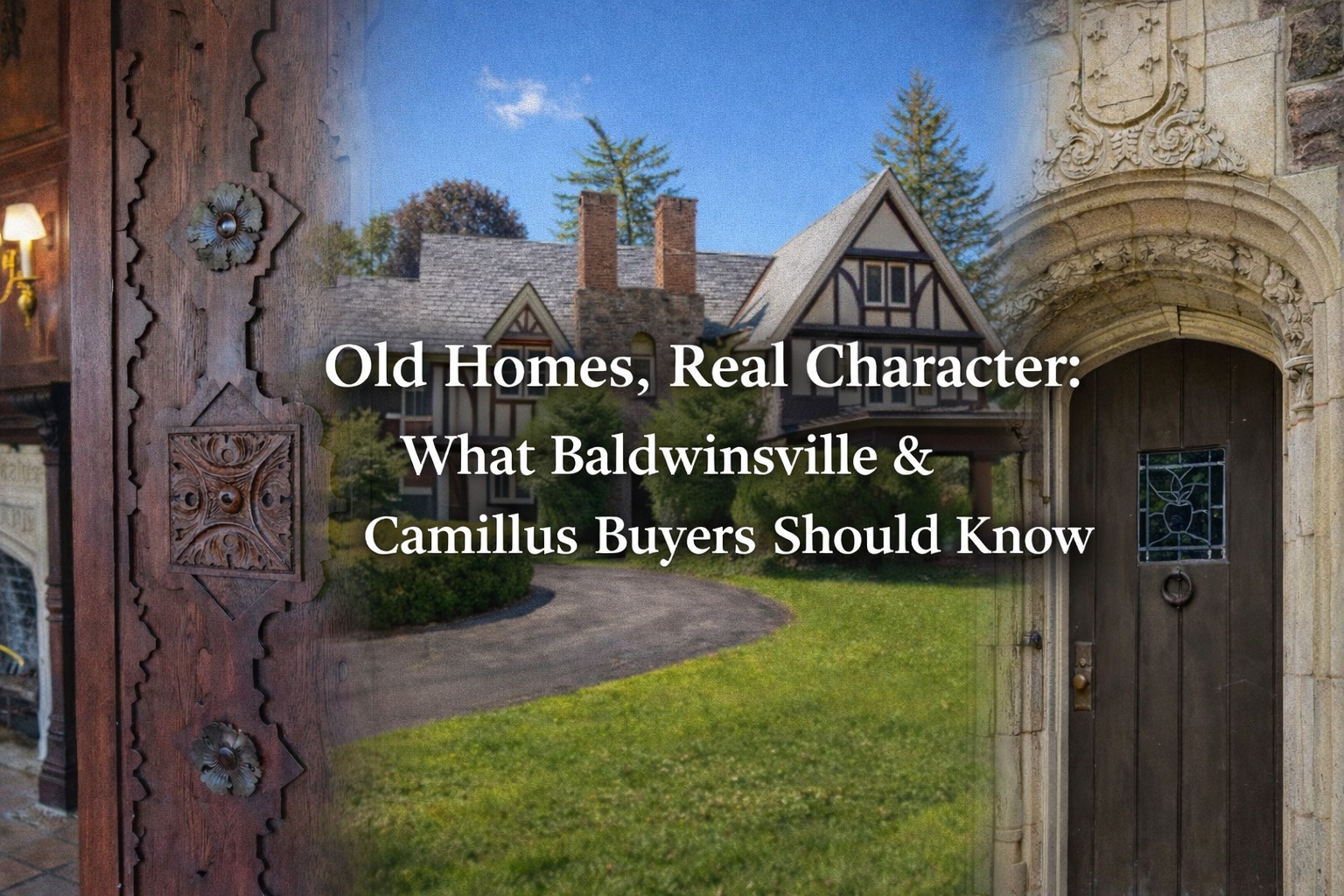
Walk into a home like this in Baldwinsville, Liverpool, or parts of Camillus, and you feel it immediately.
Not staged. Not manufactured. Not duplicated.
Real craftsmanship.
From hand-carved woodwork to arched stone doorways, these homes weren’t built for speed—they were built with intention. And today, that level of detail is increasingly rare—and costly to recreate.
But let’s be clear from the start:
these homes offer something special… and they also come with considerations.
✨ Craftsmanship You Simply Can’t Recreate
Look closely and you’ll see it:
- Hand-carved wood paneling and built-ins
- Original tilework and masonry that has stood the test of time
- Solid doors, detailed trim, and materials that feel substantial
These weren’t mass-produced. They were crafted—often by hand, on-site.
Recreating this level of detail today isn’t impossible… but it’s expensive, and often overlooked in modern construction.
🏛️ Character That Tells a Story
Older homes weren’t just designed—they evolved.
- Pocket doors that separate and define spaces
- Leaded or stained glass windows
- Fireplaces designed as true focal points
- Architectural details that reflect the era they were built in
Every feature adds depth. Every detail has purpose.
These homes don’t just provide space—they create an experience.
⚖️ The Reality: What You Need to Know
This is where it’s important to stay grounded.
Along with the charm, older homes may include:
- Knob and tube wiring (in some cases still active) — yikes
- Older plumbing materials — a little more yikes
- Asbestos in insulation or flooring — and now we’re piling it on
- Lath and plaster walls, which require a different approach than drywall (grab your Tylenol… and maybe a mask)
- Insulation that may not meet modern standards — sounds simple enough… refer back to the previous bullet points
There can be additional considerations when updating systems while preserving original character.
Understanding this balance is key—and for many, it’s absolutely worth the effort.
If you’re unsure what to expect when evaluating systems and materials, reviewing resources on what to expect when buying an older home can be helpful.
🧠 It’s Not About Size—It’s About Fit
Older homes come in all shapes and sizes—from smaller village properties to larger historic residences.
The real consideration isn’t square footage—it’s alignment.
How a home functions, how it feels, and how it fits into your plans over time all matter more than simply how new it is.
🔥 Who These Homes Are Perfect For
You might find an older home is the right fit if:
- You notice the details—the woodwork, the craftsmanship, the elements many people might overlook
- You appreciate character and individuality over something brand new and more uniform
- You understand that improvements may happen over time and are comfortable approaching them thoughtfully
- You’re drawn to homes with presence—spaces that feel distinct the moment you walk in
👉 For many buyers, it’s not just about the home—it’s about what makes it stand apart.
🚫 When a Different Style May Be a Better Fit
Older homes may not align with every buyer’s preferences.
Some buyers may prioritize:
- Fully updated systems and finishes
- Minimal maintenance
- Modern layouts and materials throughout
And that’s completely valid.
The goal is not to force a fit—it’s to find the right one.
💬 Final Thought
Homes like this require more than just listing—they require positioning.
Because when they’re presented as “just another house,”
their value can be overlooked.
But when their craftsmanship, history, and uniqueness are properly highlighted?
👉 They attract the right attention—and often stronger results.
📍 Curious What Your Older Home Might Be Worth?
If you own a home with this kind of character, how it’s presented matters.
📞 (315) 278-5231
🌐 www.aroundsyracuserealty.com