
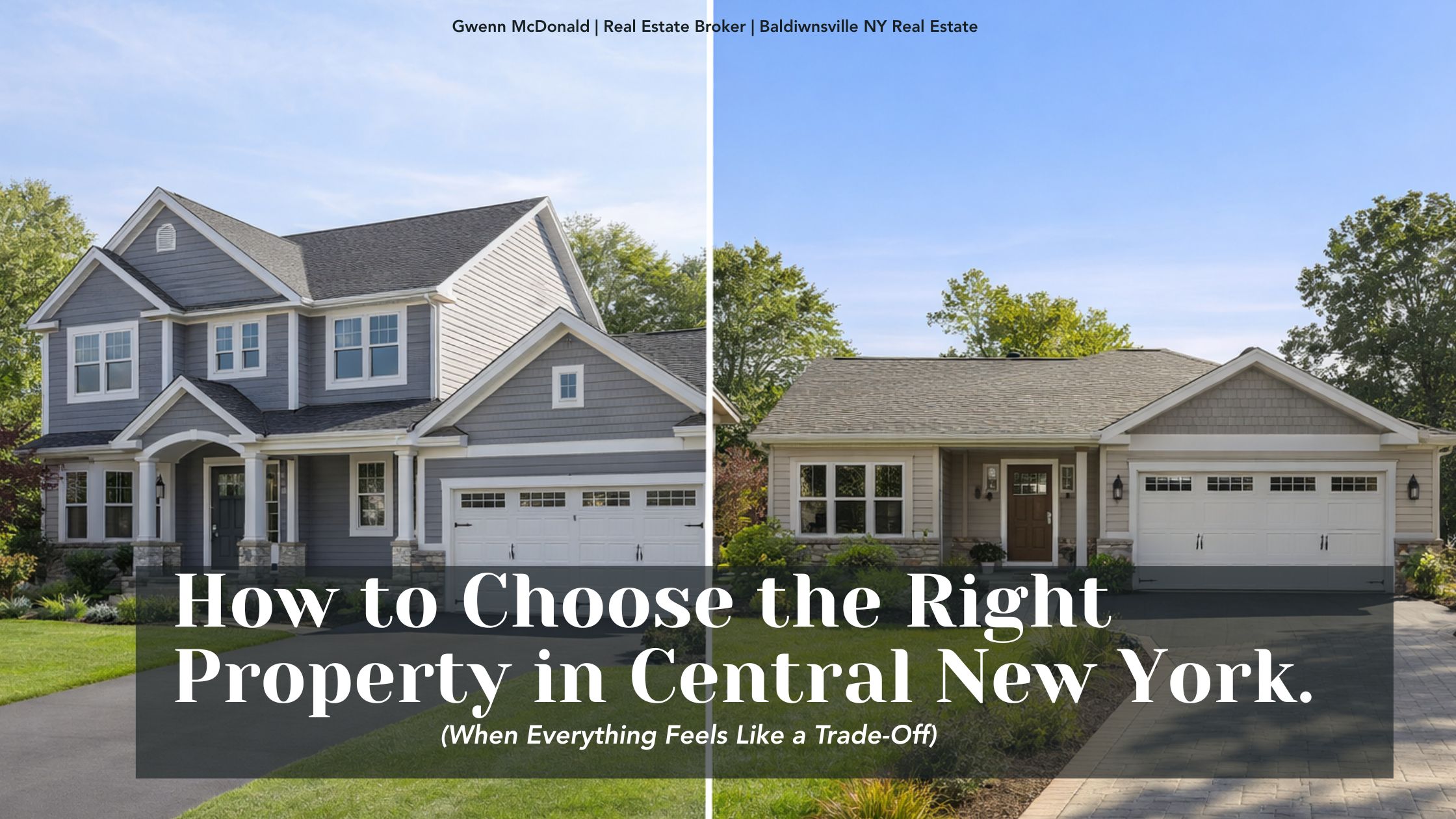
Ask almost any buyer right now where they are in their search process…
(just give them a second)
There’s a point where things stop feeling clear.
What started as a simple idea—we’re ready to move—turns into a series of trade-offs.
Do we want space… or convenience?
Privacy… or proximity?
A home that brings people in… or one that lets us step away?
Stop Looking for the Holiday House
Instead of thinking about the big moments—the holidays, the parties, the once-in-a-while gatherings—try this:
Look at a Tuesday.
Not a celebration.
Not a full house.
Just an average day.
Where are you spending your time?
What does the space around you feel like?
Who’s there—and who isn’t?
Because those bigger moments?
They’re still going to happen.
Just in a home that also fits your everyday life.
And that’s where most buyers start to find clarity.
And the truth is, most buyers aren’t struggling to find options.
They’re struggling to decide between very different ways of living.
It Usually Comes Down to Two Directions
Lately, I’ve been seeing buyers land in one of two places.
Not always immediately—but eventually.
On one side:
Homes centered around lifestyle and connection.
Neighborhoods, outdoor spaces, pools, areas designed for gathering.
On the other:
Properties that offer separation.
Land, privacy, quiet, and room to move without interruption.
Both are appealing.
But they offer very different day-to-day experiences.
The Hard Part Isn’t Finding the Right Home—It’s Choosing the Right Fit
Most homes will check some of the boxes.
The challenge is understanding which things actually matter once you’re living there.
It’s easy to prioritize features in the beginning.
But over time, what matters more is how the home supports your routine.
- How you spend your mornings
- What your evenings look like
- Whether your space feels full… or quiet
- Whether your home becomes the place people gather—or the place you go to recharge
That’s where clarity starts to happen.
Why This Feels More Difficult Right Now
Part of what’s making this decision harder is that both types of properties are showing up stronger in the market.
Well-designed homes with outdoor entertaining spaces are becoming more intentional.
At the same time, properties with land are drawing more attention—especially from buyers looking for space that feels usable, not just expansive.
So instead of choosing between “better” and “lesser,” buyers are often choosing between two strong options.
And that’s a different kind of decision.
There Isn’t a Right Answer—But There Is a Better One for You
This is usually the point where people start asking:
“What should we do?”
But the better question tends to be:
“How do we actually want to live?”
Because once that becomes clear, the rest tends to follow.
The features matter—but they matter in context.
A pool isn’t just a feature. It’s a way of spending time.
Land isn’t just acreage. It’s a different kind of daily experience.
And when those align with how you want your life to feel, the decision becomes easier.
A Simple Way to Think About It
If you’re stuck between options, try this:
Picture a normal Tuesday.
Not a party.
Not a holiday.
Just an average day.
Where are you spending your time?
What does the space around you feel like?
Who’s there—and who isn’t?
Because those bigger moments will still happen, no matter which home you choose.
It’s the everyday experience that tends to define how the home really feels.
And that’s where the answer usually becomes clearer.
If You’re Still Weighing the Options
If you’re in that in-between space, these may help:
- A look at how buyers are choosing between
A Backyard Built for Summer or Space to Breathe - What to consider when evaluating
Homes with Pools in Central New York - And what makes properties stand out when looking at
Homes with Land in Central New York
Final Thought
Most buyers don’t need more options.
They want clarity.
And that usually doesn’t come from seeing more homes—it comes from understanding how different homes support different ways of living.
Once that part is clear, the right decision tends to feel a lot more obvious.
If you’re starting to sort through those decisions, having a clear framework can make the process feel a lot more manageable.
—Gwenn