
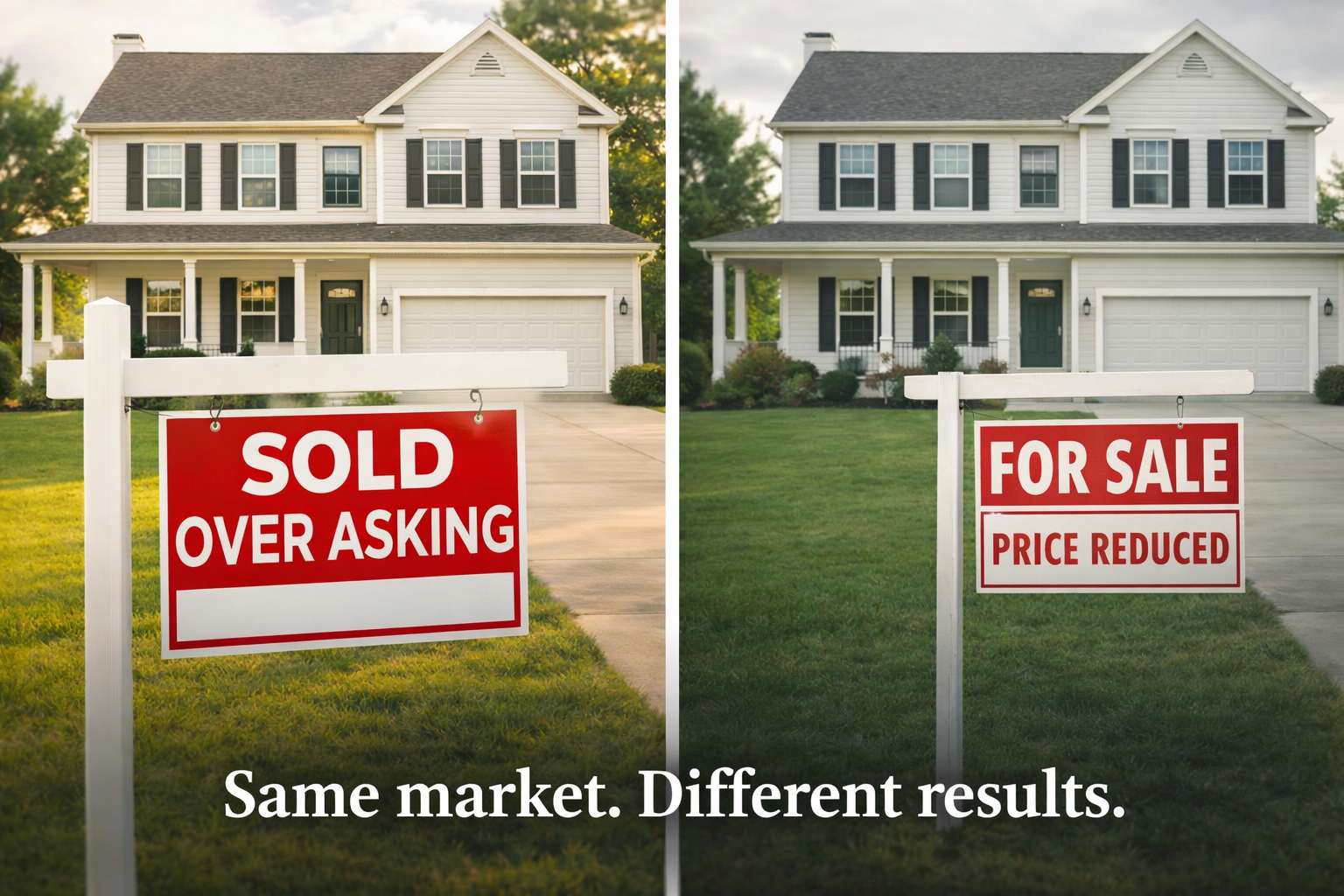
In today’s Central New York market, one question comes up again and again:
“Can you really overprice your home right now?”
And with so many homes selling over asking in Central NY, it’s easy to assume pricing high doesn’t matter as much anymore.
After all, we’re still hearing stories of homes selling $50,000—even $60,000—over asking.
So, it’s a fair assumption:
👉 Maybe pricing high doesn’t matter as much anymore.
But what’s actually happening behind those sales tells a very different story.
🧠 What Sellers Think Is Happening
Most sellers see those headline numbers and assume:
👉 “Those homes must have been underpriced.”
And sometimes, that’s partially true.
But more often than not, something more strategic is happening.
💡 What’s Actually Happening
The homes you’re hearing about that sell $50,000 or more over asking?
Most people assume they were underpriced.
In reality, many of those homes were strategically positioned to create competition.
That’s a very different approach than simply “pricing low.”
Because when a home is truly underpriced without a plan, it doesn’t always create strong demand—it can create hesitation.
⚖️ The Difference Between Pricing and Positioning
Pricing isn’t just about choosing a number based on comparable sales.
It’s about how your home is positioned within the current market.
Ask yourself:
👉 “Am I pricing this to get ONE buyer… or to create FIVE competing buyers?”
Because those are two completely different outcomes.
In simple terms, there are three ways a home can enter the market:
1. The Momentum Strategy
Positioned slightly below where we expect it to sell.
The goal is to:
- maximize exposure
- increase showing activity
- create urgency
- drive competition
This is often what leads to multiple offers—and ultimately, prices being pushed higher.
2. Market-Aligned Positioning
Priced directly in line with comparable sales and buyer expectations.
This approach tends to:
- attract serious buyers
- create steady activity
- reduce volatility
It’s often the right fit for sellers who value predictability.
3. Strategic Premium Positioning
Priced at the higher end of the value range.
This works when:
- inventory is limited (such as now) BUT..
- the home has standout features
- buyer demand in that segment remains strong
This requires strong presentation—and patience.
🚨 Where Overpricing Becomes a Problem
Even in a seller’s market, overpricing still matters.
Because today’s buyers:
- are highly informed
- are comparing multiple options
- and make decisions quickly
If a home feels even slightly overpriced relative to its competition…
it often gets skipped.
And once initial momentum is lost, it’s difficult to regain.
Remember it’s important to understand why some homes still create bidding wars while others don’t.
📍 What We’re Seeing in Central New York
In Baldwinsville and across Central New York, we are still seeing homes sell well above asking.
But not every listing experiences that outcome.
Some homes generate immediate activity and multiple offers.
Others sit quietly—despite similar market conditions.
The difference is rarely luck.
👉 It’s how the home was positioned from the start.
🎯 The Bottom Line
⭐Yes—you can absolutely overprice your home, even in a seller’s market.
But more importantly:
⭐ But not every home that sells over asking was “underpriced.”
In many cases, those homes were intentionally positioned to create competition.
If you want to understand how that strategy actually works, this breaks it down clearly:
👉 The Strategic Seller’s Guide to Pricing Your Home in 2026
That’s a very different approach than simply choosing a number and hoping for the best.
📩 Thinking About Selling?
If you’re considering selling, the first step isn’t deciding on a price.
It’s understanding:
- where your home fits in today’s market
- how buyers will perceive it
- and which positioning strategy aligns with your goals
Because in this market, the outcome isn’t just about timing.
👉 It’s about selling with strategy.