
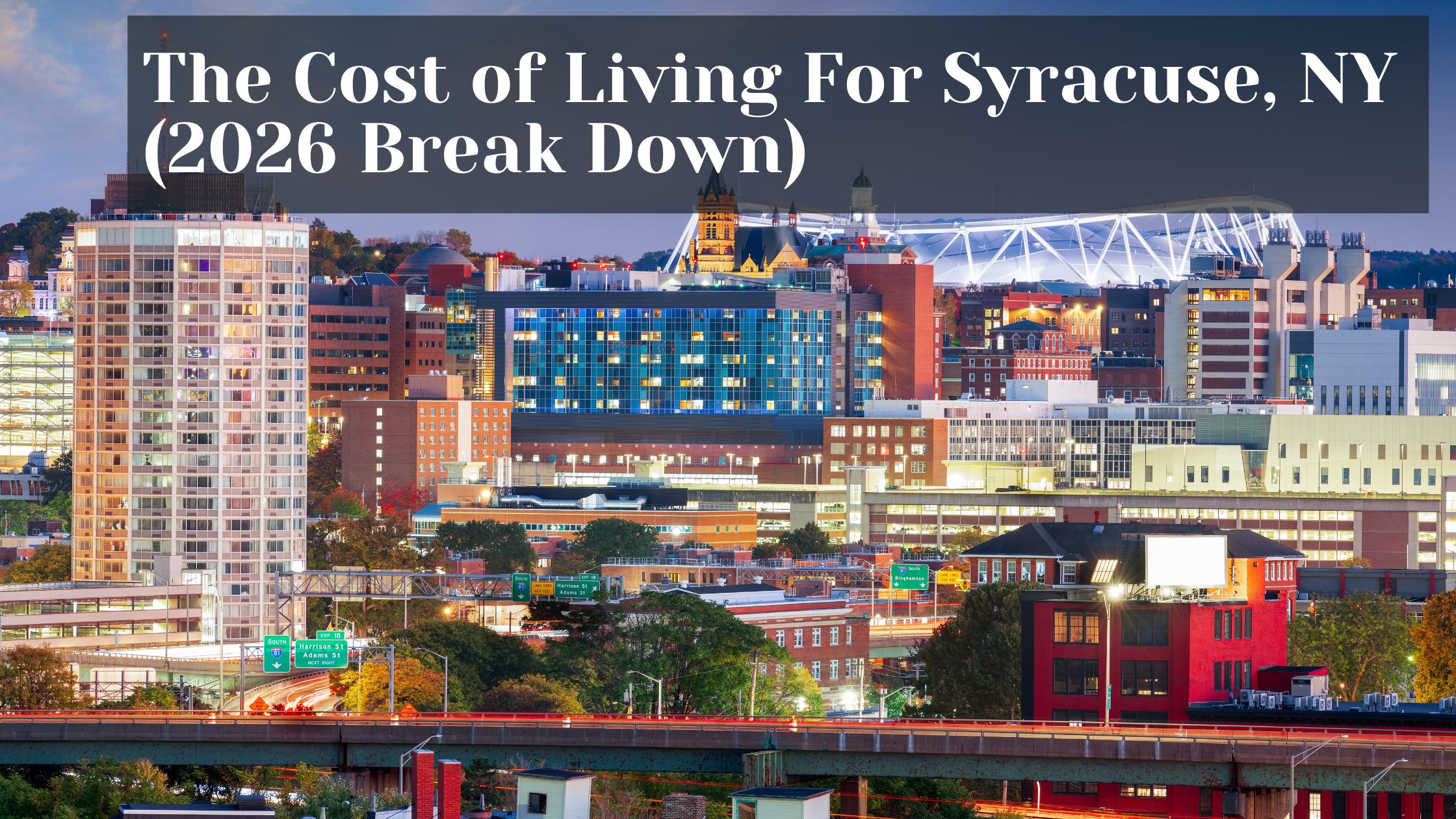
Cost of Living in Syracuse NY (2026 Breakdown You Actually Need)
If you’re thinking about moving to Syracuse, NY, one of the first questions is:
👉 Is it actually affordable to live here?
The answer is yes—but like any market, the details matter. Here’s a realistic breakdown of what it costs to live in Syracuse in 2026, using both local insight and data-backed sources.
💰 Overall Cost of Living in Syracuse NY
According to BestPlaces (Sperling’s), Syracuse has a cost of living index of 87.4, which is:
- 12.6% lower than the U.S. average
- 28.1% lower than the New York State average
Typical monthly estimates:
- Single person: ~$2,900/month
- Family: ~$2,600–$3,500/month (depending on lifestyle)
👉 Compared to most of New York, Syracuse is still considered relatively affordable.
🏡 Housing Costs (Where the Market Has Shifted)
This is where many online articles are outdated—pricing has changed.
Current Home Prices:
- Most homes today fall within the $200K–$300K range
- Updated, move-in ready homes can exceed that range
- Desirable suburbs like Baldwinsville, Liverpool, and Camillus vary depending on location and condition
👉 Inventory and demand have pushed prices up, especially for updated homes.
Rent:
- 1-bedroom: ~$1,000–$1,400/month
- 2-bedroom: ~$1,300–$1,900/month
👉 Still reasonable compared to larger metro areas, but rising.
🧾 Property Taxes (Important to Factor In)
Property taxes in Central New York are:
- Higher than the national average
- Highly dependent on location
👉 Example:
- Baldwinsville often compares more favorably
- Compared to areas like Salina or Clay, which can be higher
👉 The real number to look at is:
home price + tax rate combined
🛒 Everyday Living Expenses
Groceries:
- Close to the national average
- Options include Wegmans, Tops, Aldi, and local markets
Let’s be honest—Wegmans alone has a bit of a cult following around here. Add in local farmers markets throughout the area, and you’ve got some great options for fresh food and everyday shopping.
Utilities:
- Generally reasonable
- ⚠️ Heating costs increase in winter months
Transportation:
- Most residents rely on a vehicle
- Typical commute times: 15–25 minutes
And realistically?
👉 You can get almost anywhere within 30 minutes. We just don’t deal with the traffic you see in larger cities.
Healthcare:
- Access to major systems (Upstate, St. Joe’s, Crouse)
- Costs generally align with national averages
❄️ Winter Costs (Often Overlooked)
Living in Syracuse means planning for winter-related expenses:
- Heating
- Snow removal (and yes… sometimes a lot of it)
- Vehicle wear and maintenance
Fun fact—Syracuse recently took home the Snow Globe Award again, so winter is definitely part of the lifestyle here.
👉 It’s not just weather—it’s part of your annual cost of living.
📍 Why Syracuse Still Stands Out
Despite rising costs, Syracuse offers:
- Homeownership opportunities still within reach
- Access to water, parks, and outdoor recreation
- Strong community-driven neighborhoods
- Proximity to suburbs like Baldwinsville
👉 You’re getting space, lifestyle, and value
📈 The Micron Effect (Why Timing Matters)
Micron’s investment in the region is expected to:
- Bring job growth
- Increase housing demand
- Impact pricing over time
👉 Buyers entering the market now may benefit from long-term appreciation.
💬 Final Thoughts
Syracuse offers a cost of living that is still competitive—especially compared to the rest of New York—but it’s important to understand where costs are rising and how to plan accordingly.
If you’re thinking about buying, selling, or relocating to Syracuse or surrounding areas like Baldwinsville, I’m happy to share what I’m seeing in the market and help you make the right move.
Gwenn